
FactSet LiquidityBook Competitor Analysis and Alternatives
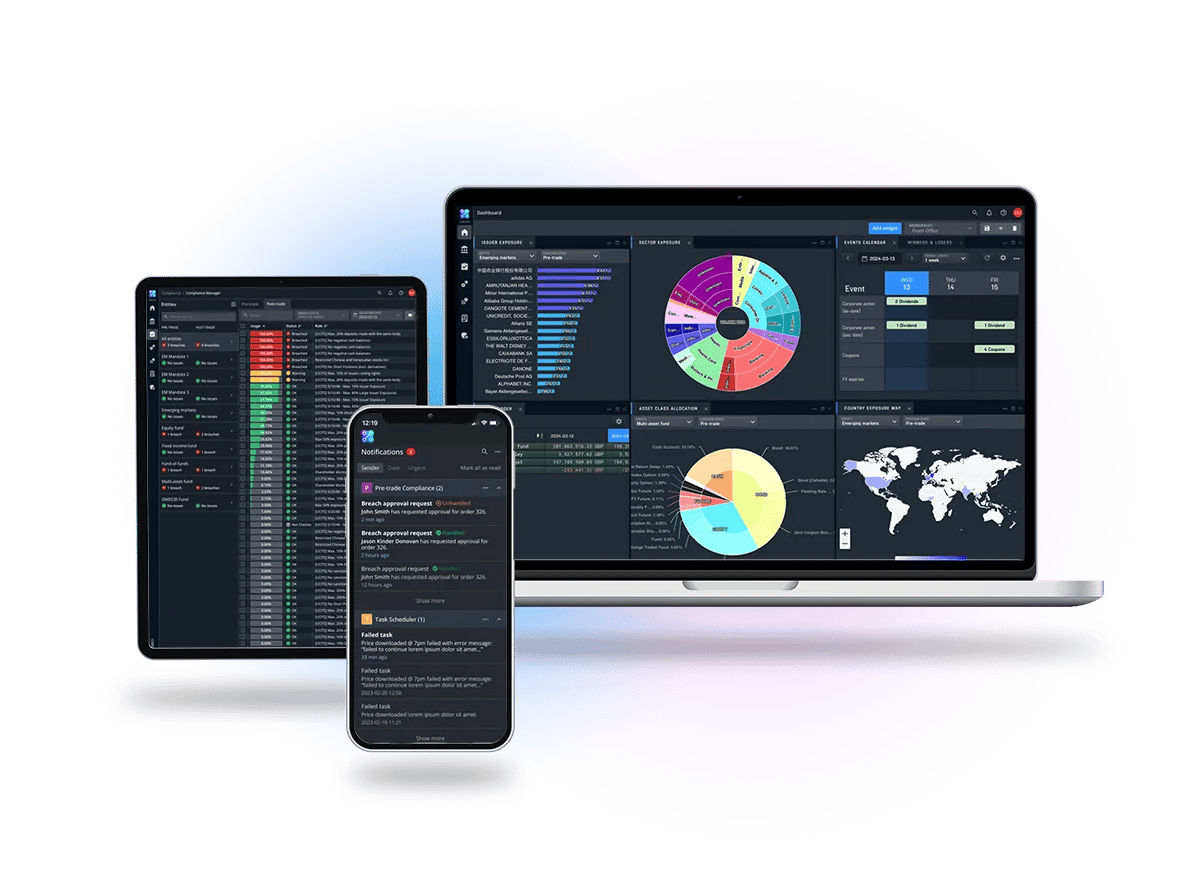
LiquidityBook, now part of FactSet, is a modern buy-side order management system used by asset managers to support trading, execution and connectivity across asset classes. While LiquidityBook is execution-focused by design, many firms now assess how specialist OMS platforms fit within a broader front-office operating model, particularly as integration into wider product ecosystems continues to evolve.This page compares LiquidityBook with Limina’s cloud-native Investment Management Platform to help investment teams understand key differences and determine which approach best supports their operating model.
Note: Vendor information here is based on company websites, industry publications and online review sites such as G2, Gartner, TrustRadius and Capterra. Such pages have been reviewed in January 2026 as a basis for this article.
Why clients opt for Limina

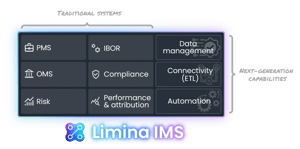
A single, cohesive platform designed to operate as one system, rather than a collection of integrated components, supporting long-term scalability without added complexity.
Greater automation across data, portfolio and order workflows reduces manual effort and supports efficient operations as investment complexity increases.
Full control over the operating model without reliance on vendor-led roadmaps, rigid upgrade cycles or proprietary constraints that limit long-term flexibility.

What clients are saying
By adopting Limina's scalable platform, Avanza has launched 33% additional funds without having to scale its investment operations team. They achieved:
- Decreased dependency on single individuals - by replacing spreadsheets
- Improved operational efficiency - by increased automation
- "It’s such a modern portfolio management system – not only because it’s cloud-based, but the entire process flow and information I get is complete and up to date. It’s simple to use, flexible to work with, and it minimises the time for the entire trade workflow." / Portfolio Manager
- "Limina helps us reduce operational risks." / CEO
What makes Limina different?
All Workflows and Assets in One System
Limina brings together the full investment lifecycle across asset classes within a single, unified operating environment, removing the need to manage workflows across disconnected tools.
- Manage portfolios, orders, compliance and data within one system
- Support multiple asset classes without parallel platforms or bolt-on solutions
- Maintain consistency and control as strategies, assets and teams scale
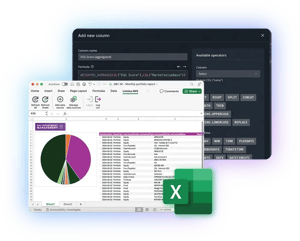
Create any Report in Seconds
Limina removes reporting bottlenecks by enabling teams to create, adapt and deliver insight instantly, without reliance on predefined templates or technical support.
- Build portfolio, compliance and operational reports on demand
- Adapt outputs for different stakeholders without development cycles
- Respond quickly to client, regulatory and internal reporting needs
Connect to Anything and Anyone
Limina is designed to integrate seamlessly into your existing ecosystem, enabling open connectivity without forcing reliance on closed vendor networks.
- Connect to custodians, brokers, data providers and internal systems
- Use open APIs and flexible data models to support change over time
- Share information across teams without duplication or delay

Self-service by Design
Limina empowers investment teams to configure and evolve their own workflows, reducing long-term dependency on vendors or ongoing professional services.
- Configure workflows, rules and views without specialist support
- Adapt quickly as strategies, regulations or operating models change
- Reduce reliance on vendor roadmaps and rigid upgrade cycles

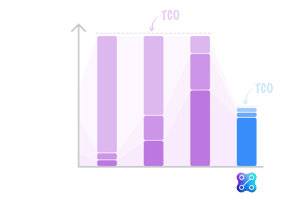
Efficient upgrades, integrations & changes save you money
See the next market leader in action
If you're looking to get ahead, and stay ahead, why not schedule a no obligation demo with us at a time to suit you?FactSet and LiquidityBook: Modern Order Management in a Broader Front-Office Context
FactSet’s acquisition and integration of LiquidityBook has resulted in a modern, cloud-native order management solution designed to meet the demands of today’s multi-asset trading environments. Combining LiquidityBook’s specialist OMS capabilities with FactSet’s extensive analytics and data ecosystem, the solution offers deep execution functionality, embedded compliance and global connectivity.
For investment firms assessing their front-office technology, FactSet LiquidityBook represents a strong execution-centric proposition. However, as firms increasingly evaluate OMS technology within the context of broader investment workflows, it is equally important to consider how specialist platforms compare with integrated Investment Management Systems such as those offered by Limina.
- 01 Platform scope
- 02 Trading functionality
- 03 Front-office integration
- 04 Compliance and controls
- 05 Technology and scalability
- 06 Choosing the right approach
- 07 Summary
Cloud-native OMS built for execution focused teams
FactSet LiquidityBook is positioned as a specialist, cloud-native order and execution management system, built to support the full trade lifecycle across multiple asset classes. Originating from LiquidityBook’s LBX platform, the solution emphasises modularity, allowing firms to adopt the specific OMS and EMS capabilities they require while maintaining a consistent trading engine. This approach is particularly well suited to trading desks that prioritise execution performance, flexibility and real-time control within a modern cloud architecture.
The integration into the wider FactSet ecosystem strengthens this positioning by embedding the OMS within an analytics driven environment, where research, market data and portfolio insights can directly inform trading decisions. In contrast, platforms such as Limina approach order management as one component of a broader investment operating model, where OMS functionality is natively embedded alongside portfolio management, compliance and data automation within a single system. This distinction is often central when firms decide between specialist OMS solutions and more unified platforms such as Limina’s Investment Management System.
Lifecycle management with configurable execution workflows
At the core of FactSet LiquidityBook is a comprehensive set of order lifecycle capabilities. Traders can manage order entry, staging, execution, allocation and post-trade processing within a highly configurable environment. Advanced blotters, dynamic allocation logic and real-time position management enable precise control over complex trading activity, supporting both high-touch and electronic execution strategies across asset classes.
The platform’s API-first and FIX-enabled architecture allows firms to automate workflows and integrate proprietary strategies, brokers and venues efficiently. This depth of execution capability makes LiquidityBook particularly attractive for firms where trading operations are a primary differentiator. By comparison, Limina’s order management capabilities are designed to operate directly within portfolio and compliance workflows, reducing hand-offs between systems and ensuring that trades are always contextualised within investment mandates and portfolio structures. This integrated approach, can be advantageous for firms seeking workflow continuity rather than standalone execution sophistication.
Analytics driven execution versus unified investment workflows
A strength of the FactSet LiquidityBook solution is its integration with FactSet’s research and analytics tools. Portfolio managers and traders can move from analysis to execution without leaving the FactSet environment, reducing friction and improving decision-making speed. Pre-trade insights, market data and portfolio analytics feed directly into execution workflows, supporting a more informed and responsive trading process.
Limina takes a different but complementary approach to front office integration. Rather than connecting multiple front office tools together, Limina provides a single platform where portfolio management, order management, compliance and data workflows coexist. By operating on a unified data model supported by investment data management, this approach reduces integration complexity and helps firms maintain a single source of truth across the front office. For organisations focused on operational simplicity and cross team collaboration, this unified model can offer long term efficiency benefits.
From execution-level controls to end-to-end investment compliance
FactSet LiquidityBook embeds compliance and risk controls directly into the trading process. Configurable pre-trade checks support regulatory reporting and other market-specific obligations, helping firms prevent breaches before orders are executed. These controls are particularly effective for managing risk at the point of execution and supporting audit readiness for trading activity.
Limina extends compliance beyond the trading desk, applying rules consistently across portfolio construction, rebalancing and ongoing monitoring. Rather than focusing compliance solely at execution, Limina enables firms to manage risk across the entire investment lifecycle through pre- and post-trade investment compliance, from idea generation through to post-trade oversight. This broader compliance perspective can be especially relevant for firms operating complex strategies or managing multiple portfolios under different mandates.
Global execution connectivity versus simplified front-office operations
Built on a cloud-native, multi-tenant architecture, FactSet LiquidityBook supports scalability, resilience and continuous enhancement without the infrastructure burden of legacy OMS platforms. The solution’s proprietary FIX network connects firms to more than 1,600 execution destinations globally, offering extensive market access and routing flexibility across regions and asset classes. This connectivity is a key differentiator for firms requiring broad liquidity access and sophisticated execution routing.
Limina is also cloud-native, but its architectural focus is on consolidating front-office operations rather than maximising execution endpoints alone. By unifying data, portfolios, orders and compliance within a single cloud-native investment platform, Limina reduces operational overhead and integration risk, supporting scalable growth without adding system complexity. This difference often becomes more pronounced as firms expand strategies, regions or asset classes.
When a specialist OMS fits and when an integrated platform makes more sense
FactSet LiquidityBook is well suited to firms that prioritise execution depth, global connectivity and tight integration with analytics within a trading-centric operating model. For organisations where the trading desk is the primary driver of technology requirements, and where portfolio and compliance workflows are already well established elsewhere, a specialist OMS can deliver significant value.
For firms operating across multiple strategies, asset classes or regions, the trade-off often shifts. As operational complexity increases, the benefits of a unified investment platform become more pronounced. Platforms such as Limina are designed to support an end-to-end investment lifecycle, bringing order management, portfolio oversight, compliance and data automation together within a single system. This approach can reduce integration risk, improve data consistency and support more scalable growth over time.
In practice, the decision is less about which system is “better” and more about which operating model aligns with your firm’s structure, growth plans and front-office priorities.
Assessing the Best Fit
FactSet LiquidityBook is a strong choice for firms seeking a modern, execution-focused order management system tightly integrated with a leading analytics ecosystem. Its strengths lie in deep trading functionality, extensive connectivity and configurable execution workflows, making it particularly well suited to trading-focused organisations and firms deeply embedded in the FactSet environment.
Limina, by contrast, is designed for firms that view order management as part of a broader investment operating model. By delivering order management, portfolio management, compliance and data automation within a single Investment Management System, Limina helps firms reduce fragmentation and improve data consistency across the investment lifecycle. As investment managers increasingly seek to simplify operations and improve transparency across the front office, integrated platforms such as Limina present a compelling alternative. For many organisations, the decision ultimately hinges on whether they prioritise best-of-breed trading tools or a unified platform that supports front-office operations end to end. Understanding these differences is critical when selecting the technology foundation that best aligns with your firm’s strategy, operating model and future ambitions.