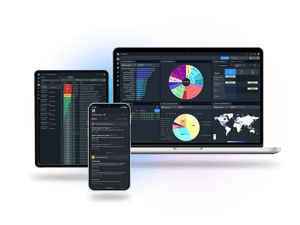


Exception-based workflows




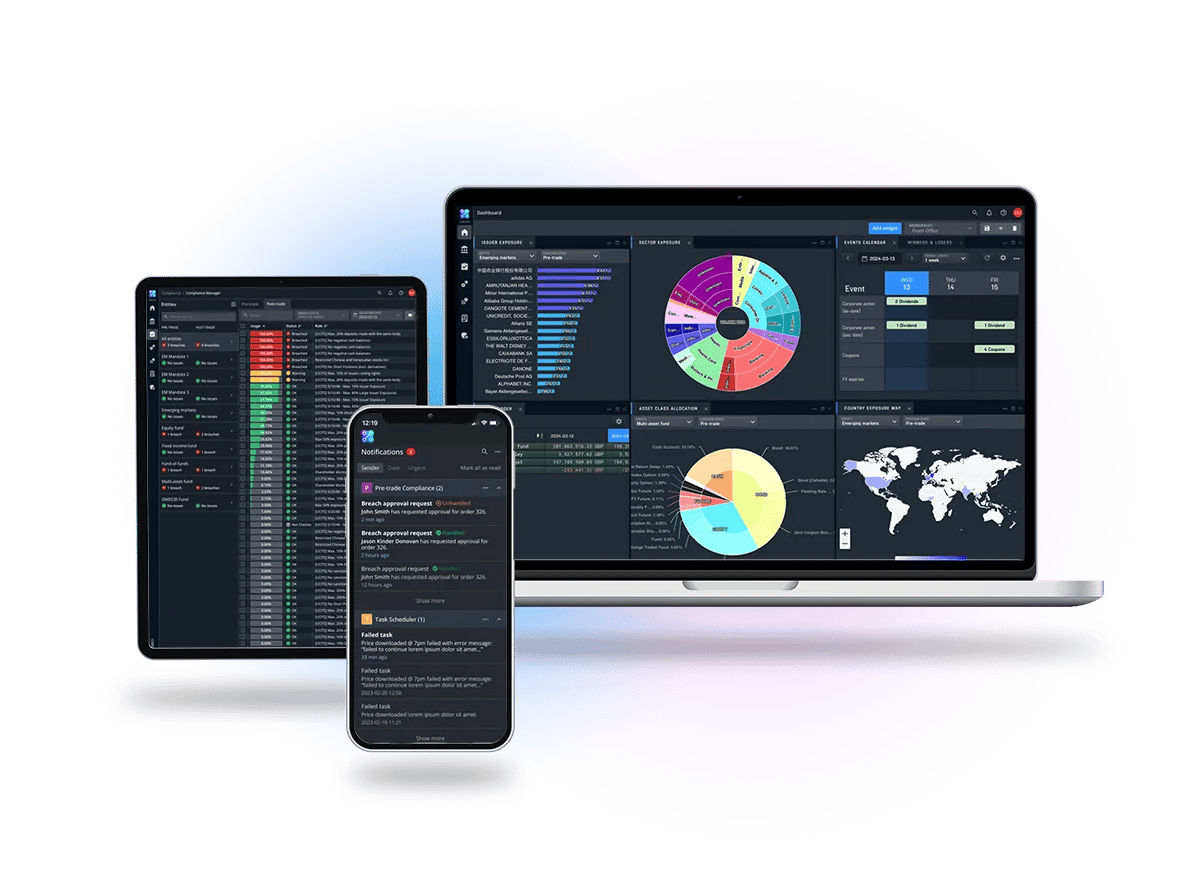






The Complete Guide to Fund of Funds Software in 2026
Fund of Funds (FoF) managers face a unique operational challenge. Investors expect real-time, granular transparency into portfolios that are, by definition, opaque and slow to report. This is true but with slightly different nuances to the challenges for hedge funds, private equity vehicles, and mutual funds, each with different investment processes.
This creates what industry experts call the "data ingestion gap." Analysts at FoF firms spend 40-60% of their time manually entering data from PDFs into systems/spreadsheets. That is time taken away from manager selection and risk management.
The right software closes this gap. This guide breaks down the leading Fund of Funds software platforms, explains the core capabilities you need, and helps you match your firm's strategy to the right technology architecture.
At a glance comparison of Fund of Funds Software
| Platform | Best For | Core Strength |
Implementation |
| Limina IMS | Multi-asset managers needing automated ops | Data ingestion without code. One platform for most functionality | Weeks |
| Allvue Systems |
PE/Debt specialists | Pacing models, partnership accounting | Months |
| eFront (BlackRock) | Sovereign wealth funds, mega-allocators | Whole portfolio risk (Aladdin integration) | Years |
| Dynamo Software |
Deal-centric teams focused on sourcing | CRM, Yale Model forecasting | Months |
| Chronograph | LPs seeking GP data transparency | Data extraction and structuring | Months |
| iLEVEL (S&P Global) |
Firms wanting managed data services | GP data collection on your behalf | Months |
| AlternativeSoft |
Manager selection and optimisation | Analytics, style analysis | Weeks |
Quick decision guide
-
Need efficient operations, easy data ingestion and multi-asset coverage? Start with Limina
-
Private equity purist focused on pacing and capital calls? Evaluate Allvue or Dynamo
-
Managing $50B+ and need public-private integration? eFront is the institutional standard
-
Biggest pain point is extracting data from GP reports? Look at Chronograph or iLEVEL
-
Focused on manager selection before allocation? AlternativeSoft specialises here
What is Fund of Funds software?
Fund of Funds software is designed for investment firms that allocate capital to other funds rather than directly to stocks, bonds, or other individual assets.
This category includes:
-
Asset managers investing in mutual funds or hedge funds, or possible SMAs (Separately Managed Accounts)
-
Limited Partners (LPs) such as family offices and endowments that invest in Private Equity (PE) and Venture Capital (VC) vehicles
-
Multi-asset allocators who blend liquid and illiquid strategies
The software handles everything from manager selection and portfolio monitoring to compliance checks and liquidity forecasting.
Note: This guide focuses on the needs of allocators and investors. General Partners (GPs) who manage PE or VC funds have different software requirements, such as capital call management and waterfall calculations, which are covered by separate platforms and not covered here.
Core capabilities every FoF platform should offer
1. Look-through exposure analysis
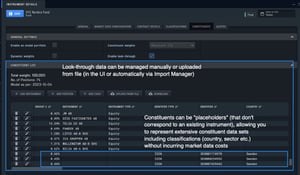
Investors aren’t satisfied with fund-level exposure reporting and risk. They want to see the ultimate underlying exposure to sectors, geographies, currencies, duration buckets, and specific companies/issuers.
A strong platform should "pierce the veil" of nested fund structures. If you hold Fund A, and Fund A holds an index future, your system should decompose that structure to show your true exposure to specific sectors or currencies, regardless of how many layers deep it sits.
2. Liquidity and cash flow management
A. Limited partners (LPs) must balance two liquidity horizons:
Operational liquidity (T+0 to T+30): When a capital call arrives, you need to know if you have cash in the right currency at the right custodian. If you redeem from a hedge fund today, will it settle in time to pay the PE call next week?
Strategic liquidity (Year 1 to Year 10): Pacing models help forecast long-term capital needs. They use probabilistic modeling to answer questions like: "Given our commitments, what is the probability of a liquidity crunch in Year 4 if markets drop 20%?"
The best platforms handle both horizons.
B. Mutual fund investors must match the redemption cycle when selling fund units, with the often shorter settlement cycle of investing in a mutual fund. This applies in many scenarios, for example, when rebalancing among fund holdings.
3. Data integration and automation
The industry is shifting from manual data entry to automated ingestion. Look for platforms that offer:
-
Self-service ETL (Extract, Transform, Load) tools that let your operations team build integrations without IT support or code
-
Agentic AI that can parse unstructured PDF documents and map data automatically
-
Turnkey ways for connecting to any counterparty without relying on the vendors' off-the-shelf connections, which are rarely sufficient
The 7 best Fund of Funds software platforms
The FoF software market has consolidated into distinct categories. Your choice depends on your firm's size, asset focus, and operational philosophy.
1. Limina IMS
Best for: Agile, multi-asset managers who need automated operations and data ingestion.
Overview: Limina is a cloud-native Investment Management System (IMS) built for front-to-mid office workflows. It focuses on decision support, liquidity management, and powerful data management capabilities.
Key Capabilities:
-
Cash simulations: Unlike legacy systems that rely on overnight batch processing, Limina lets you query your portfolio state at any point in time, past, present, or simulated future. This enables dynamic cash laddering so you can see how a new subscription or reallocation impacts your cash buffers for T+3, T+30, or any future settlement date.
-
Recursive Look-Through: Limina's data model is inherently nested. It decomposes multi-layered fund structures to show constituent-level exposure. You can run compliance checks against underlying holdings, even if those holdings sit three layers deep.
-
Self-Service Integration: Operations teams can build their own custodian and data integrations using no-code ETL tools, reducing dependency on IT or vendor consulting.
Pricing: Transparent, publicly listed pricing starting from $70,000/year, scaling based on users and portfolios rather than AUM.
Implementation: Weeks
Source: Limina IMS
2. Allvue Systems
Best for: Private Equity and Private Debt FoFs deeply embedded in the Microsoft ecosystem
Overview: Allvue emerged from the merger of Black Mountain Systems and AltaReturn. It is the dominant platform for managers focused on illiquid private markets. The system is built on Microsoft Dynamics 365 Business Central, making it familiar to anyone who uses Microsoft Office.
Key Capabilities:
-
Pacing Models and IRR Hub: Allvue excels at strategic liquidity forecasting. It helps LPs model capital calls and distributions over multi-year horizons, essential for managing "over-commitment ratios" where you commit more capital than is currently available in cash.
-
Agentic AI ("Andi"): Allvue's AI assistant helps parse unstructured data from PDFs and automates workflows, moving beyond simple OCR to intelligent data management.
-
Co-Sourcing Model: Rather than maintaining separate systems, the LP and Administrator work on the same Allvue instance. This "Golden Record" approach eliminates reconciliation discrepancies.
-
Investor Portal: A branded, secure portal for sharing documents and reports with investors.
Pricing: Custom
Implementation: Months
Source: Allvue Systems
3. eFront (BlackRock)
Best for: Sovereign Wealth Funds and mega-allocators managing billions in AUM
Overview: eFront, now part of BlackRock, is the institutional standard for alternative investments. Its integration with Aladdin creates a unique value proposition for massive institutions that need to see public and private market exposures on a single dashboard (note: Limina covers this type of functionality as well).
Key Capabilities:
-
Whole Portfolio View: A key selling point is the ability to merge public market risk (via Aladdin) with private market exposures (via eFront) in one view. This helps CIOs understand total beta to specific factors across all asset classes.
-
Complex Waterfall Calculations: eFront supports sophisticated carried interest models, multi-GAAP accounting, and the most complex fund structures.
-
Regulatory Compliance: Built for the stringent reporting requirements of sovereign wealth funds, pension plans, and large endowments.
Pricing: Custom
Consideration: The power comes with complexity. This is the right choice for institutions with the resources to manage a heavy enterprise platform.
Source: eFront (BlackRock)
4. Dynamo Software
Best for: Deal-centric teams where relationship management and sourcing drive alpha
Overview: Dynamo started as a CRM and evolved into a portfolio management system. It remains the platform of choice for firms that view deal flow and GP relationships as their primary competitive advantage.
Key Capabilities:
-
Yale Model Integration: Through a partnership with Aspequity, Dynamo offers probabilistic cash flow forecasting based on the Yale Model. This helps LPs model liquidity needs using empirical data on vintage years and strategy types.
-
HoldingsInsight: A data enrichment service that identifies concentration risk. For example, it can tell you that you are exposed to a specific portfolio company through five different VC funds.
-
Pipeline and Due Diligence Tracking: Dynamo excels at managing the "soft" data around investments, including meeting notes, due diligence questionnaires, and deal pipeline tracking.
Pricing: Custom
Implementation: Months
Source: Dynamo Software
5. Chronograph (for Limited Partners)
Best for: LPs seeking radical transparency into private capital portfolios without burdening GP relationships
Overview: Chronograph provides market-leading analytics and reporting tools specifically designed for Limited Partners and fund of funds. It focuses on extracting and structuring data from GP reports.
Key Capabilities:
-
Comprehensive Data Capture: Chronograph extracts fund and portfolio company performance data, cash flows, capital account balances, fees, carried interest, fund terms, and valuation metrics from GP reports.
-
Minimal Operational Burden: The platform is designed to require minimal internal resources. There are no clunky templates or burdensome requests to GPs.
-
Flexible Integrations: Users can build custom reports with flexible query builders or integrate with Excel and downstream systems via API.
Source: Chronograph
6. iLEVEL (S&P Global)
Best for: Fund of funds that want managed data services to handle GP data collection
Overview: iLEVEL is a portfolio monitoring platform trusted by over 650 General Partners and Limited Partners globally. Its key differentiator is the Managed Data Services offering, where S&P Global's team collects and cleanses data from your GPs on your behalf.
Key Capabilities:
-
Complete View: See fund investments, co-investments, and direct investments on one platform.
-
Managed Data Services: A team of private markets data professionals collects capital calls, distributions, fund valuations, underlying fund holdings, and portfolio company operating metrics directly from GPs.
-
Benchmark Comparison: Compare your performance against Cambridge Associates benchmarks, custom benchmarks, or PME calculations.
-
Mobile Access: Access your data from any device.
Source: iLEVEL (S&P Global)
7. AlternativeSoft
Best for: Manager selection and portfolio optimisation for institutional investors
Overview: AlternativeSoft focuses on the "first step" of the FoF lifecycle: selecting and allocating to managers. It is an analytics platform that helps allocators build an optimal investment universe before moving into operational execution.
Key Capabilities:
-
Advanced Portfolio Analytics: Calculate performance, risk, and correlations across mutual funds, hedge funds, and private market funds.
-
Data Integration: Aggregates data from sources like Morningstar, Bloomberg, and Preqin.
-
Style Analysis: Calculate sensitivity to factors and isolate manager skill.
-
Portfolio Construction: Build and compare multiple model portfolios to optimise asset allocation.
-
Operational Due Diligence: A secure platform for exchanging documentation and DDQs with investment managers.
Source: AlternativeSoft
How to Choose the Right Platform
The best software for your firm depends on your operational philosophy and where you generate alpha. One of these systems might not be mutually exclusive either. For example, Limina and AlternativeSoft are great complements to one another.
Choose Limina if:
-
You are a multi-asset manager investing across hedge funds, mutual funds, or private equity
-
You need real-time liquidity simulation, not just end-of-day reports
-
You want to be able to integrate any data source and send data anywhere easily, without reliance on IT, your vendor or coding
-
You value fast implementation (weeks) and transparent pricing
Choose Allvue or Dynamo if:
-
You are a Private Equity or Private Debt specialist
-
Your primary need is pacing models, partnership accounting, and capital call management
-
Deal sourcing and GP relationship management are core to your strategy
Choose eFront if:
-
You manage a massive institutional portfolio
-
You need to integrate public and private market risk in a single view
-
You have the resources for a multi-year implementation and dedicated internal support
Choose Chronograph or iLEVEL if:
-
Your biggest pain point is extracting and structuring data from GP reports
-
You want managed services to handle data collection on your behalf
Choose AlternativeSoft if:
-
Your primary focus is manager selection and portfolio optimisation
-
You need analytics tools before making allocation decisions
Conclusion
Choosing Fund of Funds software is a strategic decision that shapes your firm's operational capabilities for years to come.
If you are stuck in the "data ingestion gap," spending more time on spreadsheets than on manager selection, it is time to evaluate modern platforms that operate at the speed of the market, not the speed of the overnight batch.
For multi-asset managers who need real-time liquidity management, recursive look-through, and great data integration tools, Limina IMS offers a compelling, agile alternative to legacy systems.
Ready to see how Limina can transform your Fund of Funds operations?
Book a demo to explore the platform's capabilities with your own portfolio data.