
INDATA iPM Competitor Analysis and Alternatives
INDATA’s iPM platform is a long-standing front-to-back system used by asset managers needing OMS, portfolio management, compliance and reporting in one environment. However, many firms now evaluate modern alternatives to reduce operational complexity, improve data quality and gain greater flexibility. This page compares INDATA iPM with Limina’s cloud-native Investment Management Platform to help investment teams assess key differences and determine which solution best supports their operating model.
Note: Vendor information here is based on company websites, industry publications and online review sites such as G2, Gartner, TrustRadius and Capterra. Such pages have been reviewed in December 2025 as a basis for this article.
Why clients opt for Limina

Greater automation reduces manual steps and minimises operational risk. Routine tasks run smoothly in the background, giving investment teams a faster, more controlled workflow.

By streamlining processes and improving data quality at source, time spent on corrections drops significantly. Front Office teams gain more capacity to focus on actual investment work.

With self-service configuration and open connectivity, changes can be made quickly without waiting for vendor resources. This flexibility helps firms evolve their setup at their own pace.

What clients are saying
By adopting Limina's scalable platform, Avanza has launched 33% additional funds without having to scale its investment operations team. They achieved:
- Decreased dependency on single individuals - by replacing spreadsheets
- Improved operational efficiency - by increased automation
- "It’s such a modern portfolio management system – not only because it’s cloud-based, but the entire process flow and information I get is complete and up to date. It’s simple to use, flexible to work with, and it minimises the time for the entire trade workflow." / Portfolio Manager
- "Limina helps us reduce operational risks." / CEO
What makes Limina different?
A Modern Platform for Today’s Teams
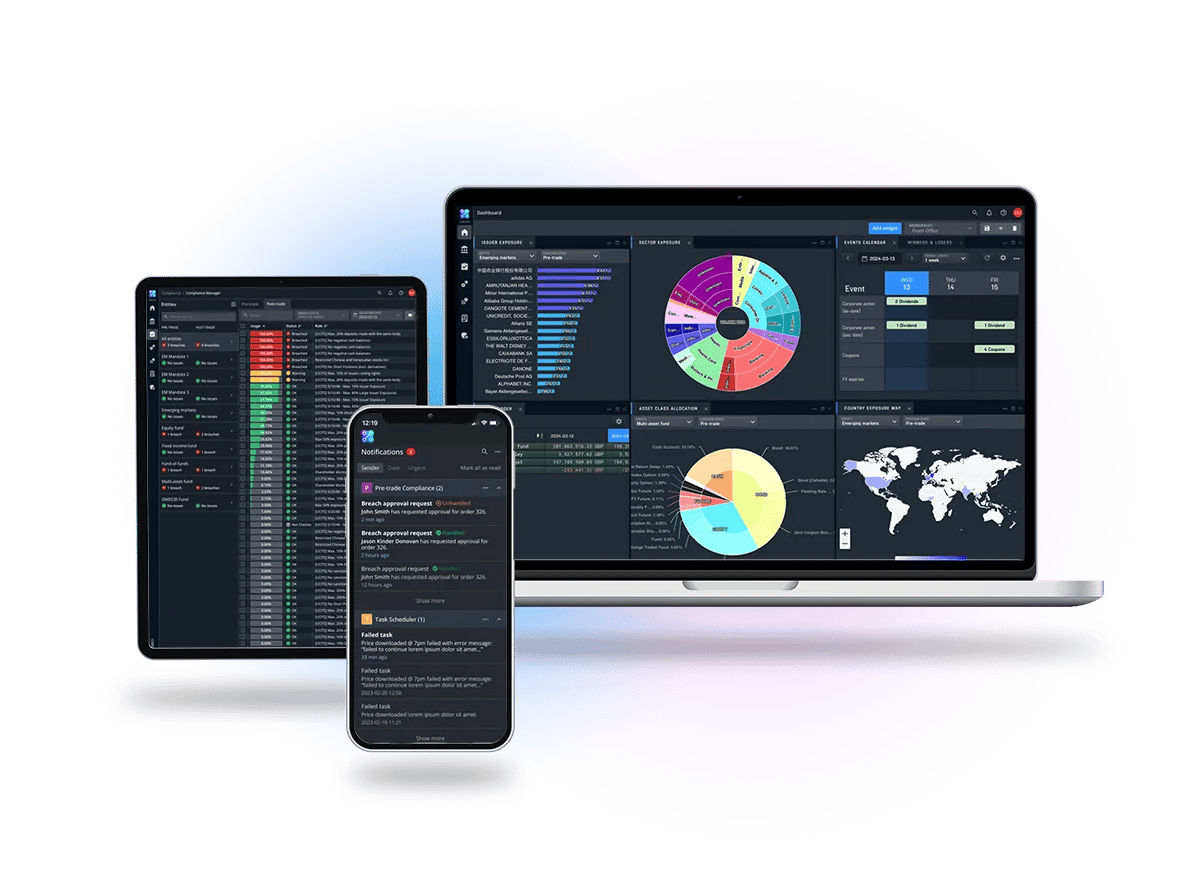
Many firms outgrow legacy systems with outdated UX and limited mobility. A modern interface and consistent experience across devices help investment teams work faster and with fewer mistakes.
- Clean, intuitive design built for speed and clarity
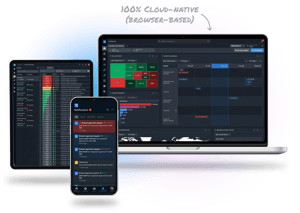
- iPad and mobile access supports flexible working across locations
- Reduced training time and increased adoption across teams
One Platform for All Investment Workflows
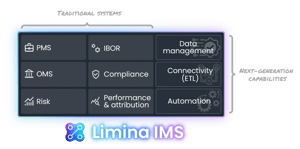
Operating with disconnected tools increases risk and slows processes. A unified system for all workflows and asset types improves data quality and reduces operational friction.
- Front-, middle- and back-office workflows in a single system
- Support for all asset classes without bolt-ons or custom modules
- Consistent, real-time data driving more accurate investment decisions
Built for Connectivity and Self-Service
Investment teams often want less reliance on vendors and IT. Open connectivity and self-service tools provide flexibility to evolve the operating model without long project cycles.
- Integrates seamlessly with any counterparty, custodian or data provider
- Self-service configuration reduces dependency on external support
- Faster adaptation to new instruments, regulations and workflows
Institutional-Grade by Design
Complex investment teams need tools designed for institutional workflows, not retrofitted retail solutions. Purpose-built capabilities improve oversight and decision making across multi-portfolio environments.
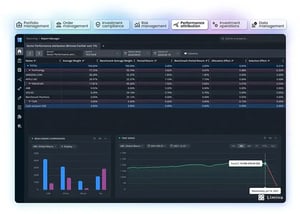
- Performance and attribution engineered for institutional needs
- Advanced portfolio modelling and scenario analysis
- Scales easily across teams, mandates and regional structures
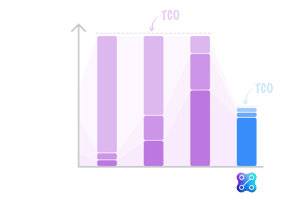
Efficient upgrades, integrations & changes save you money
See the next market leader in action
If you're looking to get ahead, and stay ahead, why not schedule a no obligation demo with us at a time to suit you?Choosing Between INDATA iPM and Modern Investment Management Platforms
Selecting the most suitable investment management platform involves more than assessing functional checklists or comparing individual features. It requires an understanding of how the underlying architecture, user experience and data model will support the way your investment team works today and how it needs to operate in the future. INDATA iPM has been part of the buy side landscape for many years and provides a broad front to back system that suits firms with long established workflows. Its traditional framework can offer stability, although it may also introduce limitations for teams that expect real time data, multi device access and the ability to adapt processes without lengthy vendor involvement.
As investment organisations modernise their operating models, many compare iPM with more contemporary, cloud native platforms to evaluate which approach provides the flexibility, responsiveness and transparency required for long term efficiency. In contrast, the Limina Investment Management Platform offers a modular and configurable alternative that supports teams seeking workflow flexibility, faster time to value and a more agile partnership model. The sections that follow outline the key considerations for firms evaluating iPM and how traditional designs differ from more modern alternatives.
- 01 Platform Design
- 02 User Experience
- 03 Operations and Reporting
- 04 Integration and Scalability
- 05 Vendor Relationship and Support
- 06 Data Governance and Auditability
- 07 Summary
A traditional architecture that supports established workflows
INDATA iPM combines portfolio management, trading, accounting, compliance and reporting in one platform. This consolidated approach offers stability for firms that operate predictable workflows and prefer to reduce the number of external vendors. Over time, iPM has broadened to accommodate a wide range of asset classes and operational functions.
Although this breadth is valuable, the architectural foundations reflect an earlier generation of system design. Older platforms often rely on slower enhancement cycles, less flexible data structures and batch oriented processes. These characteristics can reduce responsiveness and make it more difficult to adapt workflows at pace. Modern platforms that follow cloud native principles provide immediate data flows, real time synchronisation across teams and the ability to introduce new instruments or process changes more quickly. Many firms highlight these differences when comparing iPM with modern alternatives such as Limina, particularly in relation to the Investment Book of Record.
Functional coverage delivered through a conventional interface
iPM provides the basic functionality investment teams need to manage portfolios and support day-to-day operations. Its interface, however, is built around a more traditional, desktop-focused design. This can suit firms with stable, office-based workflows, but many teams now expect a simpler experience with fewer clicks, clearer navigation and the ability to work seamlessly across devices.
Portfolio modelling and exposure analysis within iPM support established investment processes, but they typically rely on more static data cycles. Modern platforms take a different approach by working with continuously updated data. Real-time recalculations, immediate exposure updates and configurable validation rules allow teams to identify issues sooner and make decisions with greater confidence. Firms adopting an IBOR model, such as the one provided by Limina, often highlight the operational benefits of working with live data rather than waiting for batch updates.
Although iPM includes an integrated Order Management System, expectations around OMS design have evolved. Investment teams increasingly look for workflows that can be adjusted internally, without relying on vendor change requests, alongside clear visibility across the full lifecycle from modelling through to execution. These factors play a significant role when firms compare iPM with more modern, cloud-native solutions such as the Limina OMS.
Stable end of day processes with limited support for real time operational models
iPM supports accounting, reconciliation and other operational workflows that suit firms operating traditional end of day processes. These workflows provide consistency and predictability for organisations whose operating models rely on batch oriented cycles and full data reviews at set points in time.
Modern platforms approach operational processing differently by prioritising exception-based workflows. Instead of requiring teams to sift through complete position or transaction sets, exceptions are highlighted automatically when data fails validation rules or quality checks. This means teams can focus their attention only where needed, reducing manual intervention and lowering operational risk. Limina’s design reflects this shift by embedding data quality controls that support automated exception detection and guided resolution, helping investment teams build confidence in their data and improve productivity.
Reporting, attribution and compliance controls remain established strengths of iPM and continue to support firms with structured oversight requirements. The distinction with modern systems lies in how reporting and controls are applied. Exception-based monitoring, configurable rules and real time dashboards allow teams to respond immediately when thresholds are breached, without relying on periodic checks or vendor-led changes. This approach reduces bottlenecks, supports faster decision making and enables operational teams to scale without increasing manual workload.
Flexible data onboarding and distribution
INDATA iPM supports integrations with custodians, brokers, market data suppliers and other third party systems. These connections are well established and can suit firms whose operating models and data flows remain relatively stable over time.
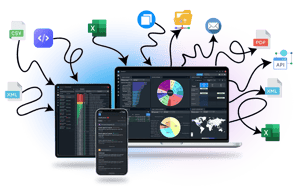
As investment environments become more dynamic, many firms require greater control over how data is imported into and exported from their investment platform. While several modern systems offer integration capabilities, Limina is uniquely designed with a fully configurable import and export manager built directly into the platform. This allows investment teams to define, manage and adapt data flows themselves, rather than relying on bespoke integration projects or vendor intervention. Crucially, this configuration requires no coding. Data mappings, transformations, validations and export formats can be adjusted through configuration rather than development, enabling teams to respond quickly to changes in custodians, data providers, internal systems or regulatory requirements.
By removing dependency on code and vendor-led projects, Limina enables firms to onboard new data sources faster, reduce operational bottlenecks and evolve their operating model at their own pace. For teams with predictable workflows, iPM’s stability and breadth may continue to meet requirements. However, as firms adopt more agile, distributed and data-driven practices, a no-code, self-service integration model becomes a critical enabler of scalability and long-term adaptability.
Different approaches to partnership and service models
When assessing long term system suitability, many firms look beyond product functionality and consider the nature of the vendor relationship. INDATA iPM has a long history in the market and follows a more traditional support structure, which can be familiar for organisations accustomed to formal ticketing processes and scheduled release cycles. This model suits firms that prefer predictable engagement and do not require frequent adjustments to their operating environment.
Limina places greater emphasis on partnership driven support, with closer collaboration between product teams and users. Cloud native providers often release enhancements more frequently and offer more flexible engagement models that focus on enabling customers to adapt their workflows quickly as their needs evolve. For organisations seeking ongoing optimisation and a more responsive relationship, these differences can influence the evaluation process.
Managing data accuracy, traceability and control across the investment lifecycle
Effective data governance has become increasingly important as investment teams manage growing volumes of data from multiple internal and external sources. INDATA iPM supports governance processes that are embedded within its existing platform design and operating model. This approach can suit firms that are prepared to align their oversight practices to the way iPM structures data processing and control, rather than defining and configuring their own governance framework.
Modern platforms place greater emphasis on proactive data quality management through continuous validation and real time control frameworks. Rather than identifying issues after processing cycles complete, data is validated as it enters and moves through the system. This approach helps investment teams increase trust in investment data by ensuring issues are detected early and traced back to their source, improving transparency across positions, exposures and workflow events.
For organisations that prioritise strong data integrity, real time auditability and operational confidence, these capabilities are increasingly viewed as essential. Platforms such as Limina are designed with built in data quality controls that support exception based monitoring, full traceability and immediate visibility into data issues. These controls also strengthen pre and post trade investment compliance by ensuring validated data is consistently applied across monitoring, reporting and decision making processes.
Assessing the Best Fit
INDATA iPM provides a comprehensive and long standing investment management platform that supports a broad range of front office and operational activities. Its integrated architecture and mature workflow coverage continue to suit firms with established operating models that rely on predictable, end of day processing and stable vendor relationships. For organisations that value familiarity and consolidated functionality across portfolio management, trading, accounting, reporting and compliance, this approach can remain effective.
However, expectations of investment management technology have evolved. Investment teams increasingly require intuitive user experience, immediate access to validated data and operating models that prioritise exception based workflows over manual review. Traditional platforms that depend on batch processing, desktop centred interfaces and vendor led configuration cycles can struggle to support the speed, transparency and control demanded by more agile and distributed teams.
Modern cloud native platforms such as the Limina Investment Management Platform are designed to address these requirements. They combine real time IBOR driven data with built in data quality controls, exception based processing and self service configuration. Flexible import and export management enables teams to onboard and distribute data without heavy vendor reliance, while configurable compliance and reporting layers support continuous oversight rather than periodic checks.
For organisations evaluating whether to remain with a traditional front to back system or transition to a more adaptable architecture, the key consideration is long term suitability. INDATA iPM remains appropriate for firms that prioritise stability and established workflows. However, for teams seeking greater flexibility, stronger data governance, faster time to value and the ability to evolve their operating model with confidence, a modern platform such as Limina provides a more future ready foundation.